Weekly ideas about living a good, meaningful and high performing life in a chaotic world from Brad Stulberg and Steve Magness. Best selling authors of PEAK PERFORMANCE, DO HARD THINGS, and THE PRACTICE OF GROUNDEDNESS.
Share
The Power of Belief
Published 4 months ago • 5 min read
Reflect: Confidence is Based On Evidence
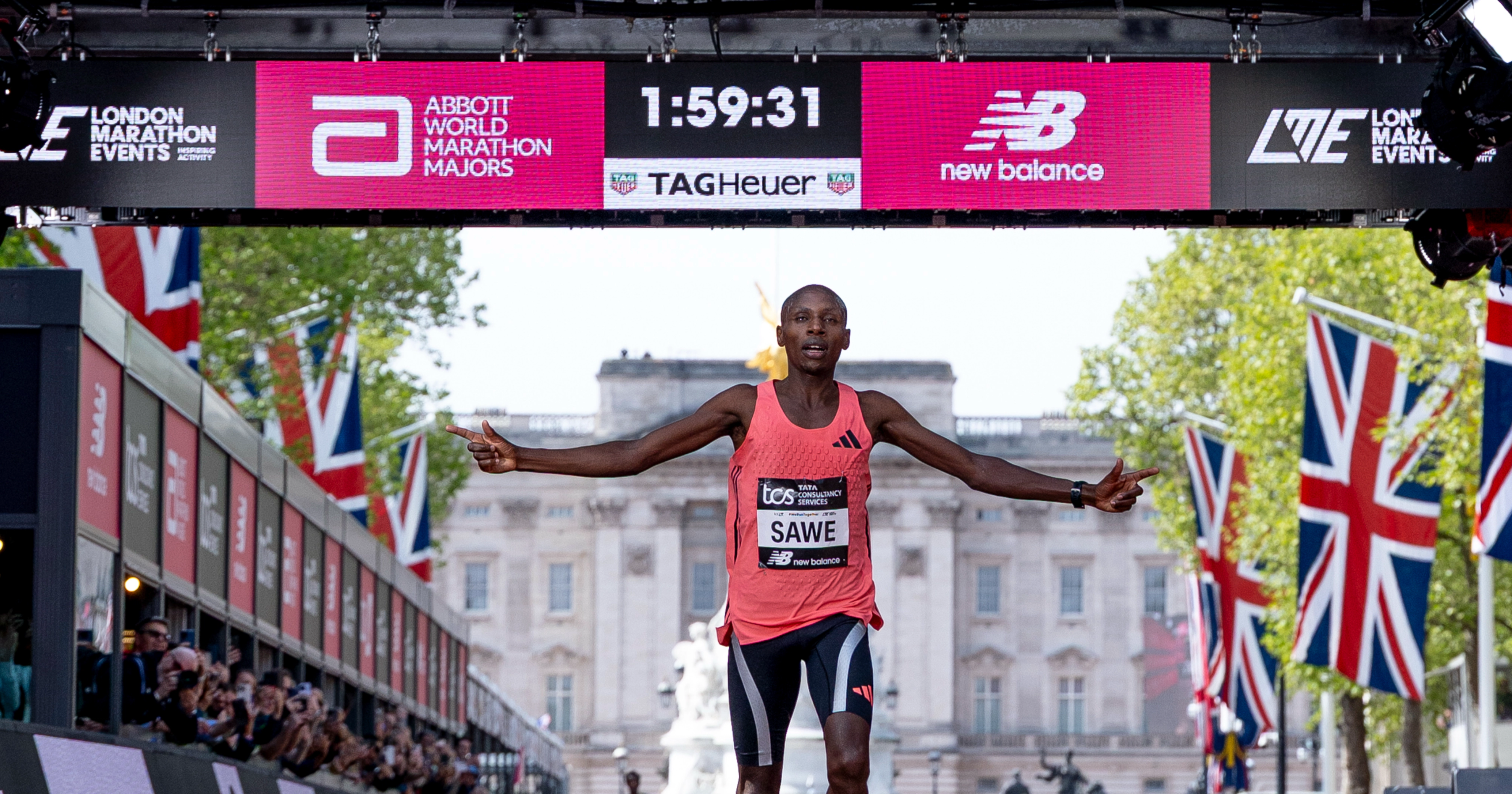
This past weekend, Sabastian Sawe became the first person ever to run a sanctioned marathon in under two hours—1:59:30 in London.
The morning after, his coach sent Brad the following message:
Sorry to bother you but I saw your post in Instagram and I just want to say thank you because through your books and podcast, you have been a great source of inspiration in my job. I am currently having in my hands “ The way of Excellence” and it has been of great help to guide me in helping Sabastian in the last few weeks of his preparation. "Confidence is based on evidence” has been a guiding concept in the last few days before the race.
So there you have it: confidence based on evidence. Doing incredible things requires steadfast belief. It's easier to believe if you've got faith. And the best way to gain faith is to give yourself the evidence.
(Obviously, this was an incredible message to receive. If The Way of Excellence played even the tiniest role in this extraordinary breakthrough, that's so cool. If you haven't yet, get the book! If this doesn't convince you, we're not sure what will. It's currently 23% off here. )
You've Got to Believe
To read or comment on the GrowthEq site, click here
This past weekend, Sabastian Sawe ran the London Marathon in 1:59:30 to become the first person in history to break the 2-hour mark in a legitimate race. If that wasn't crazy enough, the 2nd place finisher also came in under 2 hours, and the 3rd place finisher broke the previous marathon world record.
In other words, it took beating the fastest time in history just to get on the podium. What an absolutely wild day that will go down in sports history. We broke down all the contributing factors, from shoes to fueling, on this week's episode of "excellence, actually". We also discussed the power of belief, which we want to touch on here. Barriers loom large in our minds. The old tales—everyone thought it was impossible, someone would die if they ran that fast, the human body just isn't capable—are, or at least can be, nothing more than myths. But the psychological toll of chasing a barrier, and the freeing effect of getting through it, are very real.
After Roger Bannister broke the 4-minute mile barrier, John Landy got under the mark just 46 days later. The next year 3 men in the same race did. Within 2.5 years, there were 10 runners who ran that fast.
But perhaps most interesting is that of the first five men to break 4 minutes for the mile, three were British. And they all shared a coach: Franz Stampfl. A year after Bannister broke the barrier, Stampfl's athletes Chris Chattaway and Brian Hewson would become the 4th and 5th men to go sub-4. Their other training partner, Chris Brasher, went on to win Gold at the 1956 Olympics in the steeplechase.
For a belief effect to take hold, it has to feel real. When we see someone we train with (or have competed against) who isn't too dissimilar from us do something that once seemed crazy, we start to think, "If he or she can, why not me?" Famed psychologist Albert Bandura spent his career studying a type of inner confidence he called self-efficacy. The most powerful contributor was what he called mastery experiences, where you go into the arena and do the thing. You gain experience through the work, and that experience gives you evidence that you have a shot.
After the groundbreaking marathon this past weekend, Sawe was asked about his mindset. Here's what he said: "I didn't believe, but I was well prepared. The training I've done, the results have come now.”
Most people get this backwards. They wait until they feel sure before they act. But confidence isn't something you summon. It's something you accumulate. The more reps you put in, the more faith you gain in your respective craft and in yourself. It is not blind or delusional faith. It is faith based on a concrete body of evidence—and it's the only kind that holds up when it matters.
Another major contributor to self-efficacy is vicarious experience. It occurs when you watch someone like you attain your goal successfully. Bandura emphasized that the impact depends heavily on perceived similarity. It's the Bannister effect to a T. His training partners saw what he did every day and thought, "We're keeping up with him... maybe we can do it too."
Bannister's coach, Franz Stampfl, put it this way: "Effort is really a mental image. The basis of athletic coaching must be to make the state of mind so strong that a world record performance is reduced to the level of instinct." While the trio of marathoners (Sawe, Kejelcha, and Kiplimo) who smashed records on Sunday weren't training partners, they had raced each other numerous times. In fact, Kejelcha had a 2-1 lead over Sawe in the half-marathon. And Kiplimo had finished 2nd to Sawe at last year's London marathon. So if someone you've competed with closely is going for it, you say, "I've run with them before, so why not?" And this explains how you get three guys breaking a world record in one race.
We bet we'll see more runners break the 2-hour barrier in the coming years. But the important part isn't that more people will run absurdly fast marathons (though it'll be neat to watch). It's what these breakthroughs teach us about how belief works, and in ways that extend beyond sport.
Research shows that role models can either inspire or discourage us. The difference comes from whether you see a role model or a worthy rival's success as achievable. Meaning, the more a role model or worthy rival seems like you (or perhaps comes from a background that allows you to say "this could be me"), the more likely that role model or worthy rival inspires. If, however, the role model or worthy rival is too distant, we create all sorts of reasons why that couldn't be us, and we psych ourselves out.
It's not that Sawe breaks 2 hours and a flood of runners suddenly think it's possible. It's that he's opened up a new path. One that is still insanely difficult, that takes the right mixture of talent, hard work, and faith. But if you're close enough, it makes the once impossible seem a touch less so. It's the same for the rest of us, whether we're trying to run a 3-hour marathon, finally finish that book, start a business, parent a first child, or whatever your new horizon may be. In all of these cases, belief effects are real.
The big leap you're looking for in your work, your craft, or your relationships will come from two sources: the experiences you have and the people around you. It's the two prongs of Bandura's self-efficacy.
Find the people doing what you want to do. Get close enough to feel it. The "impossible" becomes more possible when it's standing next to you. And then give yourself the personal evidence—from practice, from prior experiences—that you can make the jump if things come together.
You don't need to feel ready. What you need is a body of evidence: your own hard work and people around you who show you've got a chance.
Barriers are hard to break. It doesn't happen without belief. In sport. And in life.
-Steve and Brad
P.S. If you're looking for more on the historic marathon or belief effects and how you can use them to push through your own limits, we've got more on this topic on this week's podcast episode, "How to Break Through Barriers (Lessons from the Sub-Two-Hour Marathon)".
For daily insights, ideas, and practices, be sure to follow us online:
Weekly ideas about living a good, meaningful and high performing life in a chaotic world from Brad Stulberg and Steve Magness. Best selling authors of PEAK PERFORMANCE, DO HARD THINGS, and THE PRACTICE OF GROUNDEDNESS.
Reflect: Start Where You Are "Research consistently shows that tougher individuals are able to perceive stressful situations as challenges instead of threats. A challenge is something that's difficult, but manageable. A threat is something we're just trying to survive, to get through.The real key to toughness is seeing the world—and yourself— clearly." —Do Hard Things The Mundanity of Excellence To read on the GrowthEq site, click here “Everyone wants to be the best. But very few people are...
Reflect: Human Excellence in an Age of AI and Automation "When everything around it says we don't measure up, don't belong, and are constantly judged, our brain acts accordingly. We live in survival mode, and fear takes over." —Win the Inside Game We're All Performing on Stage To read on the GrowthEq site, click here We’ve moved life from the backstage to the front. We’re all performing for someone. Some of us on social media, others in our workplace, and even AI monitors us. It’s now normal...
Reflect: What Toughness Actually Is "Real toughness is experiencing discomfort or distress, leaning in, paying attention, and creating space to take thoughtful action. It's navigating discomfort to make the best decision you can." —Do Hard Things What The Odyssey Can Teach Us About Navigating Life To read on the GrowthEq site, click here This weekend, a 2,800-year-old poem had the biggest opening of Christopher Nolan's career. Bigger than Batman, Oppenheimer, you name it. A quarter of a...